Morning coffee queue at The Banff Centre’s Maclab Bistro, and the line-up consists of the usual suspects: a poet with a post-yoga glow, a sculptor in a postparty funk, and a conference suit with a pre-caffeine twitch. At the front of the line, two girls in knee-high boots, sequinned silver skirts, and massive, winged fur coats wait for their skim lattes. I sneak a glance at the taller one – her brown hair teased into an electrified madness, one glittering oversized eyelash peeling away from her face. The girls/women/amazons look as though they have fought the wilds for this coffee. Small pieces of bracken fall from their hair onto the floor. “Music video,” one of the she-beasts says with a tired smile in response to my staring. “Indie Band,” she adds. It all becomes clear. The cool kids.
I am about to slink away with my herbal tea to my way uncool day job when the king of the cool kids shuffles in. With long, dishevelled hair, an old-man cardigan, and the kind of loafers Jesus would wear if he was a drummer/producer/audio-engineer wunderkind, “Hey”, Shawn Everett says to me, just like he says hey to Bob Dylan, or Eddie Vedder in his real life. “Hey Shawn”, I say back so that the music-videoettes can hear. For a brief moment, I too, rock.
The Banff Indie Band Residency, a two-week program for indie rock groups is only in its third session, but the energy it is putting out is far from acoustic. An intensive writing, recording, and performance program in which three up-and-coming groups are given access to the kinds of resources for which most musicians wait a lifetime, the program is one big amplified band camp. Three bands, Winnipeg’s Mise en Scene, Vancouver’s Abramson Singers, and Doldrums from Toronto/Montreal, have been chosen to board the Banff Indie Band train.
“The success of previous residencies only feeds the calibre of faculty and bands which we’re able to bring together for this program,” says Theresa Leonard, director/executive producer of Audio programs. “These artists are in for an incredible ride.” Supported by the Centre’s Film & Media department, each band receives its own rehearsal and writing hut on Tunnel Mountain, four full days of recording and mixing in the Centre’s studios, and access to more recording engineers, live sound engineers, lighting technicians, filmmakers, and other artists than they can shake a drumstick at. A dozen audio work studies are also involved in the program, including a couple who should have left the Centre a month ago when their original contracts ended. “What are you still doing here?” I ask one guy, remembering his farewell drinks and a girlfriend he was keen to return home to. “Indie Band,” he says.
On top of the professional Banff Centre equipment, the indie artists also have access to specialized equipment donated by program supporter Yamaha Canada Music, and Banff Centre partner, Cantos Music Foundation. Among the rare instruments and tools made available by Cantos for the bands’ creative tinkering are a 1970’s Mellotron (the same instrument used in the psychedelic preamble to The Beatles’ Strawberry Fields Forever), and an American RCA-44 ribbon vocal microphone. “This is the holy grail of microphones,” one work study tells me. “It’s not just the Elvis of mikes, it’s the Elvis mike. The same as he used.”
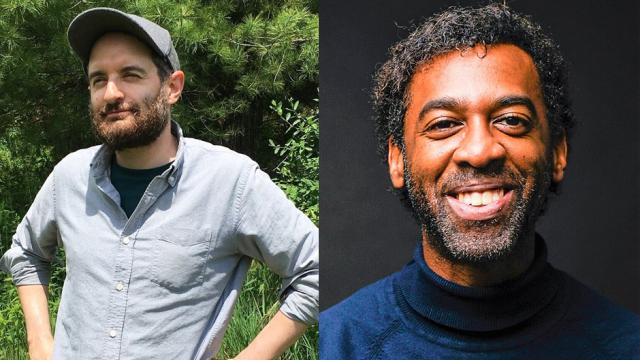
The attraction of access to The Banff Centre’s A-grade music facilities is one thing, but it’s the faculty in attendance for the program that is Indie’s ultimate draw-card. “You don’t just find yourself in situations where you get to record with these people,” says Shawn Everett of his colleagues, producers Tony Berg and Howard Bilerman. “Any band would have to spend mega-bucks to record with these guys,” an artist says of the three of them.
Howard Bilerman has been at the epicentre of the Canadian indie movement since its inception in the nineties. He’s worked with groups such as Wolf Parade, Bell Orchestre, and Arcade Fire (as well as being a member of the band), and for a week his decades of production experience are at the disposal of the three Banff bands. To Bilerman, a ‘retreat’ such as the Banff Indie Band program offers artists a special kind of recording experience. He references Exile on Main St., which was recorded when The Rolling Stones bunkered down in a mansion in the south of France, as evidence. “A band removes themselves from their normal environment, and immerses themselves away. They get to spend time together and bond as people, and almost as an afterthought, they get to make a record. It’s pretty much what this Banff Centre environment encourages,” Bilerman says. “It’s pretty rare.”
Described by many as the “most connected man in LA,” producer Tony Berg is also in Banff to work with each of the bands. The same ear he lends to artists such as Pink, Randy Newman, and Lupe Fiasco, is applied to the work of the Banff bands. “I have two goals,” Berg says of his Banff Centre work. “One is for the artists to walk away feeling like they’ve gained something from the experience, that they might be able to better realize their own visions in the future. And secondarily, to learn myself from the process. Every time I work with a new artist, I’m exposed to something new, and it improves my work as a producer.”
Each of the Banff Centre indie bands walks away from the residency with a fistful of studio recordings, mixes, and music videos, as well as two live recordings. In two weeks they achieve more than many bands would manage in two years. Before the program even enters its final weekend, one of the groups – Mise en Scene – is already getting airtime with a new track on Calgary radio, and the three bands’ live performance in the Margaret Greenham Theatre is being streamed by CBC’s Radio 3.
“I’ve never heard of any other program like this in the world,” Everett tells me during a coffee break on the final studio day. “There are a lot of schools that teach pop and rock recording, but here, these things are not just being taught, they’re actually happening. There are no classes for the audio work studies. Instead, the bands are recording songs for actual albums, and the engineering and production is real. It’s hands-on in the way that the jazz and classical audio programs have been run here for years, and it makes crazy sense for the Centre to run a program like this. Production for rock and pop – this is the audio industry.” Everett waves his hands and laughs through his mop of hair. “And it’s fun to have this party vibe. It’s just cool, you know?”
“Sure,” I tell him, remembering how I spent last night watching Coronation Street reruns. “Cool.”