Archive | Banff International Research Station RSS feed for this section

Eight things I learned about art + science collaboration while eating a sandwich

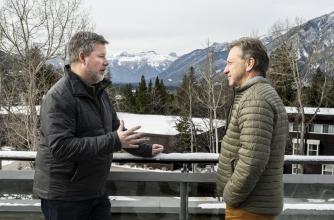
Banff  Centre president Jeff Melanson (left) and CIFAR president and CEO Alan Bernstein take part in a panel discussion following an announcement of a partnership between the two organizations. Photo: Kim Williams, The Banff Centre

Banff Centre president Jeff Melanson (left) and CIFAR president and CEO Alan Bernstein take part in a panel discussion following an announcement of a partnership between the two organizations. Photo: Kim Williams, The Banff Centre

Yesterday the Canadian Institute for Advanced Research (CIFAR) and The Banff Centre announced a new partnership aimed at strengthening Canada’s capacity in creativity and innovation.

In his opening remarks Banff Centre president Jeff Melanson, tongue planted firmly in cheek, suggested that he and CIFAR CEO Alan Bernstein were announcing their engagement. But behind the smiles lay the essence of this partnership – which is aimed at establishing productive relationships between scientists and artists. CIFAR and The Banff Centre together represent many of the world’s best minds engaged in the arts, and in research in the natural and social sciences. The aim is to get those minds talking – together in Banff, adding to the rich conversation already established through the Banff International Research Station (BIRS).

The partnership was kicked off with a luncheon and panel discussion about colloboration in the arts and science. Herein, eight things I learned while munching my egg salad sandwich:

  1. Quantum physicists can be awesome dancers – and they can even use dance to illustrate the principles behind quantum computers: meet our panel moderator Krister Shalm and his Quantum Dance project. Krister has promised to bring his dance to Banff in the future!
  2. From Alan Bernstein: Nobel Laureates in the sciences are 14 times more likely to be artists and ten times more likely to be engaged in creative writing than other scientists. Continue Reading →
Comments { 0 }

Dedicated group developing new resources for First Nations mathematics

The group involved in the First Nations Math Education week at Banff International Research Station gathers outside the Max Bell Building. Photo: Brent Kearney.

Teachers + educators + Aboriginal elders + mathematicians = results that prove to be very interesting.

Since their first meeting in 2007, the First Nations Math Education group has made more and more connections and developed more and more resources every time they have gathered together. “We’re really a team – our goal is to create a community of learning by pulling resources together and creating new ones,  all for the advancement of mathematics and the learning of mathematics,” says Melania Alvarez, UBC Mathematics outreach coordinator.

Recently, this group was here in Banff working on developing mathematical resources in which Aboriginal students in Kindergarten through to first-year university, “can see themselves reflected in the curriculum. Where there is rich cultural content and interesting mathematics.” The intention behind these resources is not intended solely for Aboriginal youth either. “We want everybody to have access to them,” Alvarez makes clear. Continue Reading →

Comments { 0 }

The creative nature of mathematics

Mathematician Dr. Richard Guy wearing his famous “Peace is a disarming concept” pin. After attending a peace walk in the late 1960s in Calgary Dr. Guy and his wife had 200 of these buttons made and have handed them out to anyone who liked them and agreed to wear one. Photo: Kim Williams.

Dr. Richard Guy is an inspiration. Period.

At the age of 96, this English mathematician is still as passionate about the teaching of mathematics as he is about mathematics itself. Sitting down with Dr. Richard Guy I wanted to ask to him about the role that creativity plays in math. I was curious to see what’s kept him interested in the field for so many years.

Dr. Guy started teaching math in 1939 at a grammar school in northern England. After taking a five-year break as a meteorologist and member of the air force during World War II, he returned to teaching math and hasn’t stopped since. He taught for 10 years in Singapore and helped set up the Indian Institute of Technology in Delhi before making his way to Calgary in 1965. He has published more than 100 papers and books, made many discoveries in the field of mathematics, and is just as committed to the education of math. As a professor in mathematics with the University of Calgary he still goes in to the university every day.  Continue Reading →

Comments { 0 }

Weekly podcast #7: Charlotte Gill, Don Giovanni, Dr. James Feng, more…

We talk about what goes on under the surface and what these hidden processes can reveal scientifically, motivationally, and artistically.

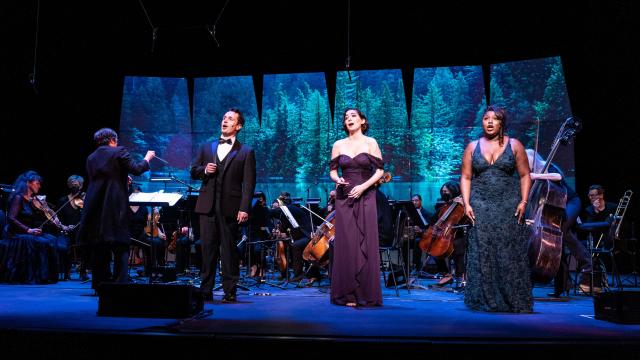
Author Charlotte Gill discusses why she came to write about her experiences as a tree planter. We meet Dr. James Feng, the organizer of the Banff International Research Station workshop on morphogenesis. And we take a look backstage in the Banff Centre Costume Shop to find out why Don Giovanni’s waistcoat has a red lining.

The Banff Centre Weekly Podcast brings you stories of the diverse projects that artists from around the world are working on, here in Banff.

Subscribe to the weekly podcast on iTunes here.

Comments { 0 }

Mathematics…in the flesh

UBC’s Dr. James Feng, at BIRS. Photo: Kim Williams.

For most of us here at The Banff Centre, the Banff International Research Station is shrouded in mystery. I wanted to find out what exactly they do with all that math and decided to chat with Dr. James Feng, one of the organizers from a recent workshop called Tissue growth and morphogenesis: From genetics to mechanics and back.

“This workshop,”  “brings together two traditionally separate communities, developmental biologists, and physicists and mathematicians,” says Dr. Feng, a professor of mathematics and bio and chemical engineering at UBC. Chatting with him is like entering into another world. He’s so passionate about outreach for mathematics, and speaks with so much enthusiasm, I couldn’t help but wonder what other biological problems could be tackled with mathematical modeling and computer simulation.

Dr. Feng’s model is dorsal closure on fruit flies, a process that happens during their embryonic development. It’s usually been explained through the lens of genetics, but at this workshop they’re examining the problem through physics and math. “You can say that the genetic code gives you the blueprint of how things should happen but the actual action of what’s happening is under physical laws, written in mathematical forms,” he says. ”Scientifically, it’s a very interesting process to see how people speaking different languages, using different terminologies, come together and say, ‘ah that’s what you mean,’ or, ‘oh I didn’t know that!’”

As with most BIRS workshops, the researchers are from all over the world - Canada, the United States, Israel, Spain, Netherlands, Germany, France, China, and Japan. “It’s a very special environment,” Dr. Feng says. ”People are here – relatively isolated from the chaos of the outside world and are very focused and surrounded by natural beauty. Somehow that puts people in the mindset that’s conducive to discussion, friendship, and collaboration.”

Comments { 0 }

The largest arts incubator on the planet

Banff Centre president Jeff Melanson. Photo montage: Laura Vanags.

I am writing this column six months into a remarkable adventure as president of The Banff Centre. At this point, it has been my privilege to meet with every single staff member of our great organization. I am constantly impressed and amazed by the tremendous passion and energy my colleagues bring to work every day. With talent, drive, and a commitment to build on our great legacy, we have a shared confidence that The Banff Centre is on the verge of transformative growth. The Banff Centre is poised to assume an international leadership role as the world’s foremost centre for the exploration of creativity and innovation across disciplines and without boundaries.

As many of you will know, The Banff Centre was founded in 1933. The Centre’s founding is remarkable in several respects. Firstly, it shows tremendous foresight for our pioneering leaders, governments, and other institutions struggling through the Great Depression to invest in the creation of an institution with our founding principles and aspiration. Secondly, we were a child of the Extension Division of the University of Alberta, an initiative that strove to ensure the best academic knowledge and insights were made available and accessible to as many Albertans as possible. So, our early days were shaped by tremendous ambition/aspiration brought together with a determination to make exceptional artistry and ideas available to all. How are these founding conditions relevant today? Our world finds itself in a period of tremendous economic change and uncertainty. These challenges, much like those brought on by the Great Depression, may transform our understanding of how our world works, what opportunities lie ahead, and what conditions must be created to ensure we can meet the challenges of tomorrow.

On April 23, 2012, The New York Times ran a fabulous piece by David Brooks on The Creative Monopoly, expressing the need for more investment in creative education for future “Creative Monopolists”. In this case, monopolist is meant to describe new entrepreneurs who are pioneering, and who can imagine totally uncharted space, territory, or opportunity. These are people who are encouraged to think dynamically, to take risks, to imagine. These are the sorts of artists and leaders we develop every day at The Banff Centre. So, what lies ahead for The Banff Centre? While it is always risky to predict a specific outcome in a creative context, I will share what I anticipate will be a few highlights of the years to come.

Content Creation and Dissemination: on one of the walls of the Eric Harvie Theatre, we have inscribed the words “Made in Banff, Shared with the World!” It is our intent to fully live up to these words through ensuring that the work of our artists, leadership development participants, conference attendees, faculty, and staff is fully captured and shared as widely as possible. Of course, we will continue to develop work physically through co-productions, commissions, and residencies, but we will also add several robust dissemination channels over the next few years. These new channels will include a Banff Centre radio stream (local and online), webcast capacity for all Banff Centre events, a renewed focus and investment in our Banff Centre Press, dramatic new endeavours in the television broadcast world, and digital media as the connector to bring all of this content together. Over the next few years, everyone should be able to access Banff Centre content from anywhere in the world on whichever media platform they prefer.

Leadership Development: The Banff Centre has a long and proud tradition of creating programs, summits, and training opportunities for Canadian leaders across disciplines and sectors. We will build on past successes by complementing our existing programming with new initiatives in executive leadership. These new initiatives will focus on creativity and entrepreneurship, social innovation/enterprise, and creative industries/cultural economics. We believe this renewed programming will play to the unique strengths of The Banff Centre and also serve to build important “think and do tanks” for some of the most serious challenges facing Alberta, Canada, and our world.

Arts Programming: I am delighted to have the opportunity to work with a tremendous team of artistic directors across our 13 artistic disciplines. With close to 4,000 artists visiting The Banff Centre each year, I do believe we are the largest arts incubator on the planet. In order to make the most of our unique global positioning and to continue to succeed on the international stage, we need to ensure we can invest fully in supporting our artists and creative partners, and continue to attract and retain the very best faculty and staff. Our ambition is to design and implement the most compelling programming possible — in essence, to provide our faculty, staff and creative collaborators with the resources to dream big, to take risks, to tackle tough questions, and to lead.

Campus Renewal: our next phase of investments in buildings will focus heavily on our artistic facilities. We are currently in the process of imagining new theatre, art gallery, art incubation, music, mountain culture, and other artistic facilities. In addition to attracting local, provincial, national, and international audiences, these facilities will enable our artists, leaders, faculty, and staff to create and imagine the next big ideas, transformative innovations, and models for community engagement.

The days ahead are exciting and it is an honour for me to follow in the footsteps of The Banff Centre’s legacy of dynamic presidents. I look forward to working with The Banff Centre team and our community to ensure we push boundaries and represent the very best of Alberta and Canada to the world.

Comments { 0 }