Finding the literary in journalism

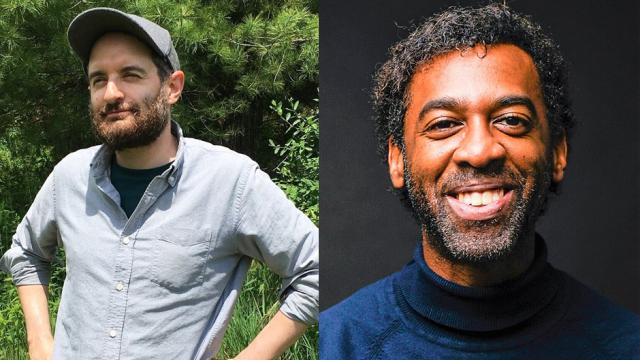
Ann Silversides, a writer in the 2012 Literary Journalism program.

Author Ann Silversides, a writer in the 2012 Literary Journalism program.

I like to joke that I was the oldest participant in the Summer 2012 Literary Journalism program, but the only one not writing a memoir. It wasn’t true (the memoir writing bit), but I’m certain that, of the nine of us, I had the most difficulty using the personal pronoun in my writing. More than two decades have passed since I was a newspaper reporter, but I absorbed the lessons of hard news training very well, and back then there was no place for the personal pronoun.

I applied to the Banff Centre program to help me break from the hold that newspaper training had on me. At the Leighton Colony, I shared the Painter House with Drew Nelles. At 24, he was the second youngest participant (and, yes, he was working on a memoir). I was astonished to overhear Drew tell someone that he reads every issue of the New Yorker magazine cover to cover. As an on-again, off-again subscriber, I often don’t make it past the cartoons. Drew worked upstairs and I was downstairs. When we arrived in Banff, his writing was at a more advanced stage than mine, so I spent more of my time hanging about the house — reorganizing and rewriting, reorganizing and rewriting. It became apparent, as we critiqued each other’s work, that Drew is a precocious master at structure, no doubt aided by all that New Yorker reading.

»Read more…

Comments { 0 }

Post-Playwrights Colony recollections

New Image

Senior playwright in residence Mieko Ouchi guide actors Sheldon Elter and Richard Lee Hsi work through a series of stage combat exercises on the Margaret Greenham stage. Photo: Brian Quirt.

The 40th Anniversary Banff Playwrights Colony concluded on April 28, and its artists have dispersed across Canada and the United States. This was my first Colony as director, and I left Banff on the mid-afternoon shuttle deeply pleased by the work so many had accomplished during the program.

Over the three weeks, plus the two-week Colony retreat in February, we brought 30 theatre artists to Banff, offered key creative time to 13 playwrights working on 14 plays, hosted 3 American artists, conducted more than 25 readings and workshop sessions with the Colony acting company, celebrated Anita Majumdar’s Governor Generals Performing Arts Award mentorship prize to work with John Murrell, and spread the word about the Colony widely via its e-newsletter and daily tweeting (search #playwrightsColony2013 for posts and photos).

In the final week we celebrated Tom Hendry’s crucial contribution to establishing the Colony in 1973 by reading his play 15 Miles of Broken Glass. 40 years later, adding to the foundation that so many have helped shape has been joyous indeed. »Read more…

Comments { 0 }

A short history of Acoustic Ecology

FMA130327_DSC2316FMA130327_DSC2316

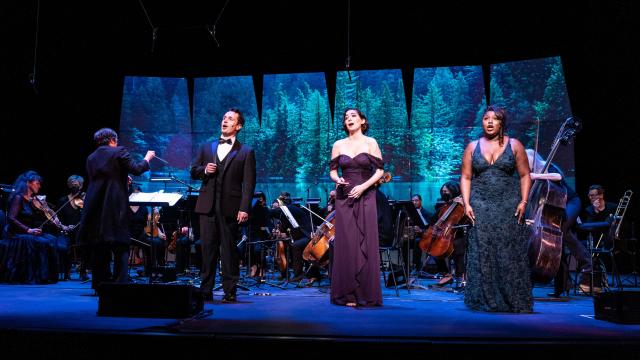
From left: Chris Wood, Nathan Clarkson and Camara Miller. Photo: Meghan Krauss.

What was the first sound you heard this morning? Take a moment, what can you hear right now?

In 1973, R. Murray Schafer started a movement to be more conscious of the sounds in the environment, what they mean and the effect they have on us. While teaching at Simon Fraser University, Schafer started the World Soundscape Project (WSP), a collection of “ear minded” people who began making audio recordings to build a “museum of sounds.” In the early 1970s, Bruce Davis and Peter Huse drove across Canada to collect “soundmarks,” unique and disappearing sounds, as well as recording conversations with people across the country about the acoustic spaces they inhabited.

In 1993, a broad spectrum of academics and professionals gathered at The Banff Centre to discuss Acoustic Ecology (the field of study initiated by Schafer), what it was and where it was going. At the time, interdisciplinary discussion was a new concept and The Banff Centre was a leader in this way of thinking.

Twenty years after that conference, where is “acoustic ecology”? »Read more…

Comments { 0 }

The lustre of the Luscar Studio: 25 years in the making

The Luscar studio, used for music recording, post-production, film scoring, and mixing (alone or in conjunction with the Telus Studio), is heavily used by many of our audio engineer  staff and work studies, and it’s a space where both Banff Centre productions, as well as commercial recording projects, come to life. Since its inception in 1988, the Luscar has seen many established and aspiring artists come through its doors. Now celebrating 25 years in production, just in time for a great renovation, we thought it was a good time to take a trip down memory lane and flash back to all the lustre of the Luscar over the years.

The latest renovations in the Luscar Studio included a new fully digital console, the Avid System; new custom built equipment racks; new acoustic treatment for the room; and a bass-trap which makes for better listening control. A big thanks to the Cultural Spaces grant for helping fund this important upgrade.

Comments { 0 }

Celebrating Edna Alford’s storied career

Celebrating Edna Alford's contribution to Literary Arts at The Banff Centre. Photo: 2007

Celebrating Edna Alford’s contribution to Literary Arts at The Banff Centre. Photo: 2007

Writer and former Literary Arts faculty member Edna Alford worked at The Banff Centre for over 15 years, and was associate director of the Writing Studio program for over a decade. Last week, I spoke to Alford, who is coming back to The Banff Centre on Tuesday, May 14 for an event that will acknowledge her influence on the literary community here at the Centre and beyond. She told me about some memorable experiences throughout her career.

“We had so many writers in the (Writing Studio) program over the years,” Alford said. “Many of the young writers I met there…went on to become very well established and accomplished people.” Watching her former students succeed is “a thrill”, she added. They include Gloria Sawai, whose novel A Song for Nettie Johnson won the Governor General’s Award for fiction in 2002, and Lisa Moore, whose book February won CBC’s annual book debate Canada Reads this year. Both writers have come back to The Banff Centre as faculty.

“That’s the other thing that’s really gratifying—to see quite a number of them come back as faculty… They in turn make their contribution as editors and mentors,” Alford said. Another former faculty member whose work Alford has edited is Yann Martel, author of the novel Life of Pi, which won the Man Booker Prize in 2002 and is an international best-seller. “Many of the people, whether or not they’ve become well known…it was just a privilege to work with them,” Alford said. The Writing Studio was a sanctuary for them to finish their work. They were almost always working on a major work of some kind, she added.

Alford also spoke about the networking that happens among Studio writers. “I’ve watched some wonderful relationships develop there,” she said. “Some of the work at the Studio was often very intense…and the writers have invested years in it before they even get to the Studio. It’s complex and challenging, and they’re very closely connected with it personally.” But one of the most important skills writers pick up in the Studio is the ability to assess their own work, Alford said. “The more the writer understands his or her work, the more they’re able to control what’s happening within the work.”

Comments { 0 }

Greg Samek: Practice makes percussion

Samek

Percussionist Greg Samek, teaching a master class. Photo: Meghan Krauss.

Recently I sat in on a master class taught by percussionist Greg Samek to a group of Grade 8 and 9 students from Edmonton. After the class, I talked with him about two of his passions — music and education. “It’s a wonderful road you’re all going down,” Samek said to the students after he played for them for a minute on a drum set and vibraphone. He was referring to their decision to play music. “It was the best decision I ever made.”

Samek, who now holds Bachelor’s and Master’s degrees in music, began his career as a self-taught drummer at the age of 17. He currently plays in the percussion group Scrap Arts Music and works on solo projects that have brought him to The Banff Centre many times over the past five years. “It pretty much was love at first sight — I knew that I needed to come back to be in the mountains to practice,” he told me.

»Read more…

Comments { 0 }